CUA Seminars
Tue April 16, 2024 4:00 pm
Location:MIT 4-270
Yanhong Xiao, Fudan University
Ten Minute Talk:"EngageCUA Launch (Abigail McClain Gomez, Michael Szurek, Simone Notarnicola)"
Event type:
Recent Publications
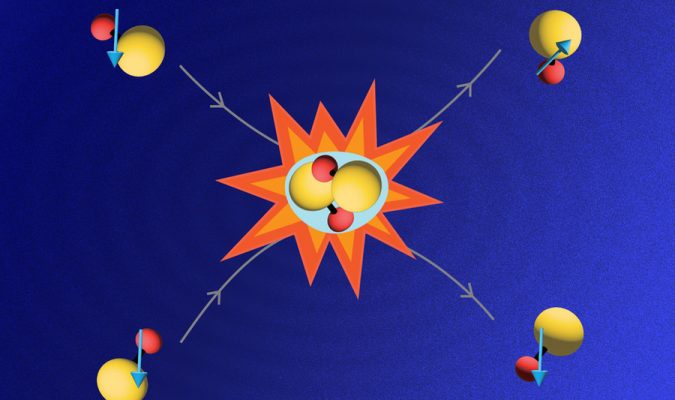
- J. Park, Y. Lu, A. Jamison, T. Tscherbul, W. Ketterle, A Feshbach resonance in collisions between triplet ground state molecules. Nature, 614(5458), 2023.
- Y. K. Lee, H. Lin, W. Ketterle, Spin Dynamics Dominated by Resonant Tunneling into Molecular States. Phys Rev Lett, 131(213001), November 2023.
- W. Ketterle, K. Geier, G. Martone, P. Hauke, and S. Stringari. Dynamics of Stripe Patterns in Supersolid Spin-Orbit-Coupled Bose Gases. Phys Rev Lett, 130(156001), 2023.
- J. Park, Y. Lu, A. Jamison, W. Ketterle, Magnetic trapping of ultracold molecules at high density. Nature Physics, 19, 2023.
Outreach Events
Fri October 13, 2023 8:30 am
Location:MIT Wong Auditorium (Building E51)
Event type:
Upcoming Events
Tue April 23, 2024 4:00 pm
Location:Harvard Jefferson 250
Helmut Ritsch, University of Innsbruck
Event type:
Tue May 7, 2024 4:00 pm
Location:Harvard Jefferson 250
Nathalie de Leon, Princeton University
Event type: