
Skip to content
← Back to All News

News: Research Highlights

262 articles

Sat, September 5, 2020

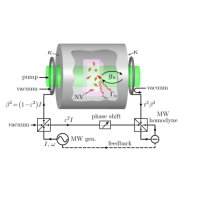
A Polariton-Stabilized Spin Clock

Figure: A polaritonic-stabilized spin clock. The reference probe field at frequency ω with intensity I is is split into a local oscillator and probe. The latter is sent to the resonant system, which consists of NV centers in diamond with population relaxation rate γ coupled to a microwave cavity at rate g. Atomic clocks are...

Read More »

Mon, July 20, 2020

Uncovering the mystery of the disappearing molecules

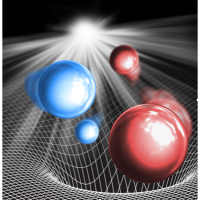
Ultracold molecules are a research frontier that builds upon the many successes of ultracold atoms in the study of quantum science. There has been much experimental effort dedicated to the realization of trapped gaseous samples of ultracold molecules. In fact, various research groups from around the world have successfully demonstrated methods to bring samples of...

Read More »

Mon, July 20, 2020

Controlled Collisions of Exactly two Ultracold Molecules

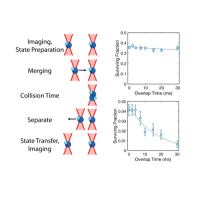
One of the fundamental questions in the study of ultracold polar molecules is “what happens when two molecules collide at ultracold temperatures?” Knowing whether the molecules undergo chemical reactions, form long lived complexes, change internal state, or bounce off each other carries important implications which will guide future research directions. Our recent experiment explores this...

Read More »

Mon, July 13, 2020

Mirror symmetry breaks and determines exciton dipole orientation in atomically thin semiconductors

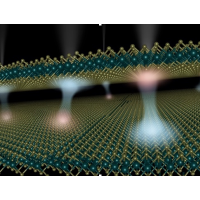
The structural engineering of van der Waals (vdW) heterostructures via stacking and twisting has been recently used to create moiré superlattices, enabling engineering of the optical and electronic properties of solid-state systems reminiscent to ultracold atomic gases. Indeed, recent experiments on transition metal dichalcogenides (TMDs), a class of layered vdW semiconductors, have shown that moiré...

Read More »

Wed, July 8, 2020

Scalable assembly of artificial atoms in photonic chips

A central goal in quantum information processing is the development of scalable quantum processors and quantum networks. Towards this end, solid-state “artificial atoms” such as colour centres in diamond are especially promising because they combine efficient optical interfaces, minutes of spin coherence, and potentially very-large-scale fabrication. Indeed, in the past 20 years of quantum engineering,...

Read More »

Thu, June 25, 2020

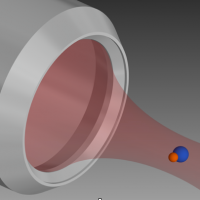
Single molecules assembled and under control!

In a recent publication in PRL, we demonstrate the assembly of a single molecule with full quantum state control – including both internal and external states – starting from a single pair of atoms. Molecules, compared to their atom counterparts, generally possess a much richer internal structure and can interact with each other via long-range...

Read More »

Sat, June 13, 2020

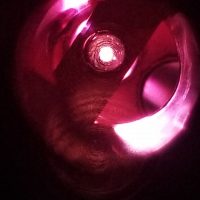
‘Photon crystals’ could be made using Rydberg atoms

Physicists in the US have come up with a way of making photons repel each other by sending them through an ultracold atomic gas. This astonishing feat could lead to the creation of “photon crystals” and exotic quantum states such as a Mott insulator.   Image caption: In vacuum optical system for photon-photon interactions.

Read More »

Sun, June 7, 2020

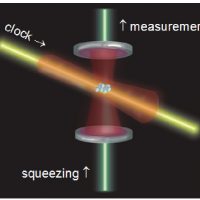
Entanglement-based Optical Atomic Clock beats the Standard Quantum Limit

Optical lattice clocks (OLC) are widely recognized as the next golden standard for timekeeping. Over the past decades, researchers around the world have made the second the best characterized among all seven of International System of Units (SI units), reaching an unprecedented fractional stability at few parts-of-ten-Quintillion (1019). Despite the tremendous effort of improving technology...

Read More »

Fri, April 10, 2020

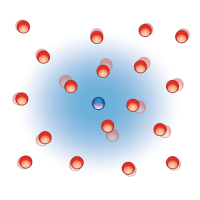
Bose polarons meet their fate at quantum criticality

An electron moving through the crystal lattice of a solid slightly attracts the ions on its path. The electron and the crystal deformations move together a “quasi-particle”, heavier than the bare electron – the so-called polaron. Such quasi-particles form the basis of descriptions of many solids. However, in modern materials, such as the high-temperature superconducting cuprates,...

Read More »

Wed, April 8, 2020

New “refrigerator” super-cools molecules to nanokelvin temperatures

For years, scientists have looked for ways to cool molecules down to ultracold temperatures, at which point the molecules should slow to a crawl, allowing scientists to precisely control their quantum behavior. This could enable researchers to use molecules as complex bits for quantum computing, tuning individual molecules like tiny knobs to carry out multiple...

Read More »